In our recent investor survey, we received questions about our approach to risk management. Two recurring themes were concentration risk and the potential for being overextended in a challenging market. As investors rightly pointed out, a robust risk management framework is critical for delivering consistent returns.
While diversification across projects, partners, and markets is a foundational part of our strategy, it isn’t the whole story. Proper risk mitigation goes deeper; it’s built into the very structure of each investment.
This post will discuss one specific tool utilized in many of our deals to manage risk and protect capital: Preferred Equity. We’ll use a current project from our CCM Development Fund III portfolio as a real-world example of this structure in action.
The Power of Priority: What is Preferred Equity?
In real estate joint ventures, there are typically two types of Equity: common and preferred. Common equity partners usually share profits proportionally after all debts obligations are paid.
Preferred Equity, however, creates a senior position in the equity portion of the capital stack. In simple terms, it puts our investors first in line for cash flows, ahead of common equity investors. Any profits common equity holders might be entitled to are subordinated to the preferred equity investors.
If a project underperforms, the common equity holders absorb the losses first, creating a critical buffer that protects the preferred equity capital and return targets. This senior position significantly increases the likelihood our investors receive their anticipated return1.
On a typical Carpathian Capital preferred equity investment, preferred Equity receives priority distributions up to a predetermined return threshold (often a 20% cumulative IRR). Only after this “preferred return” is fully paid does the common equity partner (in our case, the developer) begin to participate in the remaining profits.
This structure is a powerful tool for downside risk mitigation. It builds a buffer for our investors’ capital and ensures they are the first to be rewarded as the project succeeds.
Case Study: Real Life Project
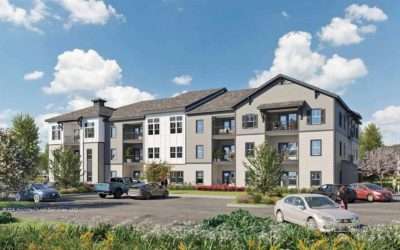
To see how this works in practice, let’s look at a current asset: a 63-home development project. This investment was structured as a preferred equity position for the Fund.
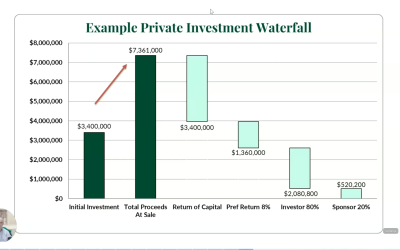
The Waterfall Structure: The Fund receives priority distributions of all project cash flows, after any required debt payments, until the great of two milestones are met:
1. A 20% Internal Rate of Return (IRR) has been achieved…
2. …or a cash multiple of 1.5x (50% return) on our invested capital has been returned.
This cash multiple is designed to protect the absolute dollar return of our capital against quick exits. While a high IRR (20%) can be achieved over a short period with minimal dollar profit, the 1.5x Multiple guarantees a minimum 50% dollar profit on the invested capital, regardless of the timeline.
Only after both of these thresholds are cleared does our operating partner participate in the remaining profits.
Layering Protections for Robust Risk Management
Beyond the preferred equity structure, we build in multiple layers of legal and financial protections to further mitigate risk. In the deal, these include:
• Builder Alignment: Our partner isn’t just the developer; their homebuilding division is also the pre-contracted buyer for the finished lots. This locked-in lot purchase agreement creates a clear and immediate path to exit, significantly reducing market risk.
• Cost Overrun Shield: The project is governed by a guaranteed-maximum-price (GMP) contract. Our partner is solely responsible for covering cost overruns, protecting the Fund’s capital from unexpected construction expenses.
• Full Veto Power: The Fund maintains control over all major financial and strategic decisions. This includes the approval of budgets, any changes to the business plan, and decisions regarding asset sales or refinancing.
• Corporate Payment Guaranty: The investment is further secured by a payment guaranty from the parent company, for up to 150% of the Fund’s contributed capital.
Answering Your Questions
This deep, deal-level approach to risk management directly addresses the concerns raised in our survey.
• How do we manage concentration risk? By ensuring each asset has a resilient, self-contained risk mitigation structure. Even a concentrated position can have a strong risk-adjusted return profile when protected by preferred Equity, guarantees, and clear exit strategies.
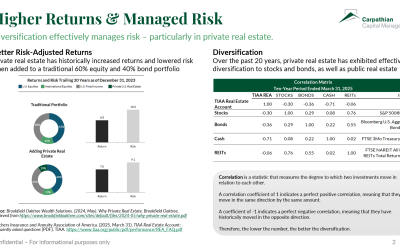
• How do we generate consistent returns and avoid being “overextended in a risky market?” By prioritizing capital preservation. The preferred equity structure is designed to perform defensively, securing our return first. By focusing on project-level returns from real assets, not speculative “multiple expansion,” we aim to deliver value that is less correlated with daily price swings and public market volatility.
Our commitment is to diligent underwriting and intelligent structuring. By building in these protections from day one, we aim to deliver strong, risk-adjusted returns regardless of broader market conditions.